How to Choose Window Treatments for Bay Windows
Bay windows are a beautiful feature, bringing extra light into a room and creating a sense of space. They can also be one of the trickier window styles to dress.
With several panes, changing angles and often limited space around the frame, choosing the right window treatment takes a little more thought than dressing a standard window. The good news is that there are plenty of options, from fitted blinds and shutters to full-length curtains.
The best choice depends on how you use the room, how much privacy you need and the overall look you want to create.
Start by Thinking About How You Use the Room
Before choosing a particular style, think about what you actually need your window treatment to do.
In a living room overlooking the street, privacy might be the priority. In a bedroom, you may be more concerned with blocking early-morning light. In a home office, reducing glare without making the room feel dark could be more important.
Once you know what matters most, it becomes much easier to narrow down your options.
Are Blinds a Good Choice for Bay Windows?
Blinds are one of the most practical options for bay windows because they can usually be fitted individually to each section of the bay.
Roman blinds are a popular choice if you want something soft and decorative. They sit neatly within the window when raised and introduce fabric, pattern and texture without covering the shape of the bay.
Roller blinds offer a simpler, more streamlined look and are useful when you want straightforward light control.
Venetian blinds are another practical option because the slats can be tilted throughout the day, helping you balance privacy with natural light.
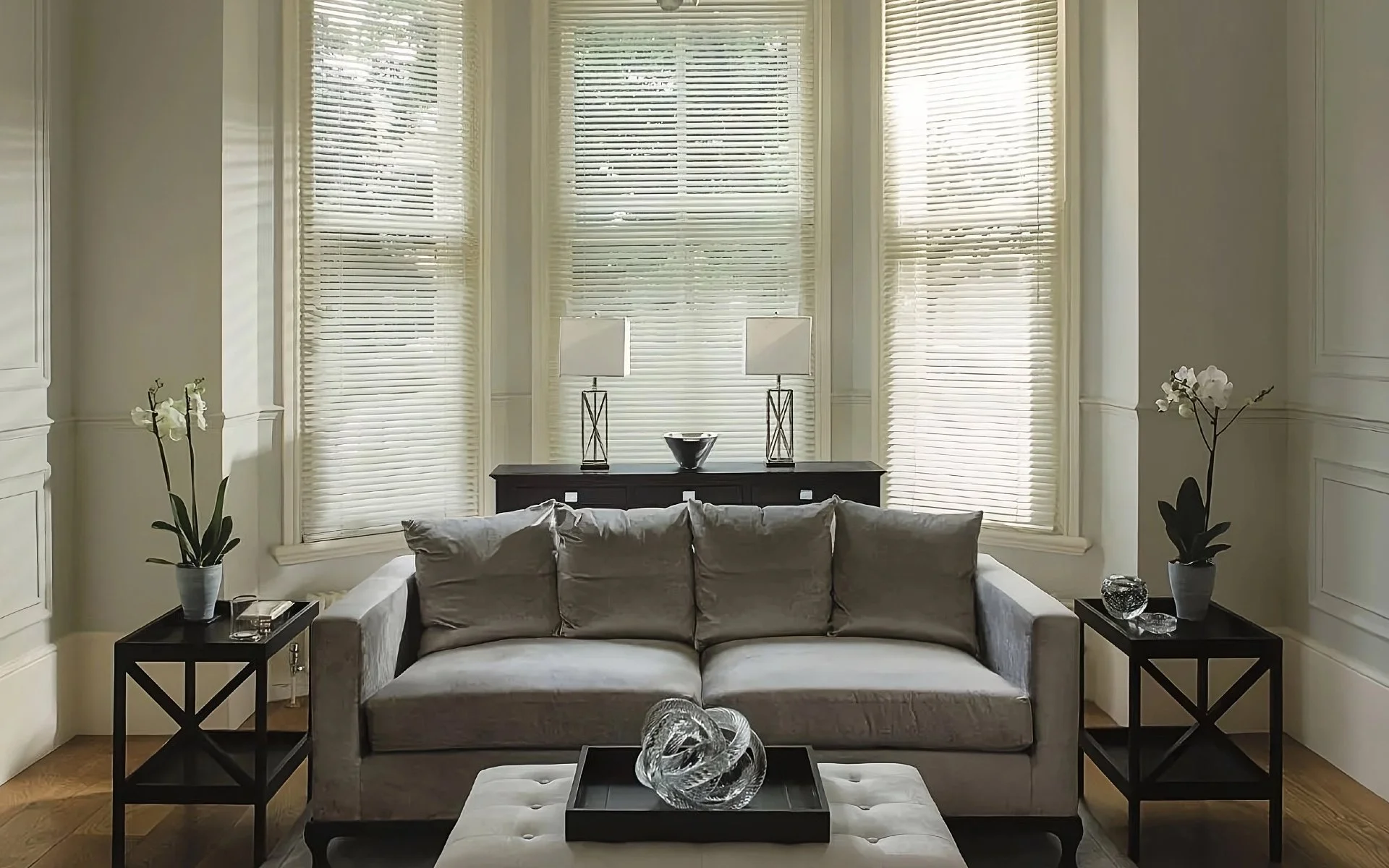
The most important part is accurate measuring. Bays are rarely perfectly symmetrical, and even a small difference between sections can affect how neatly the blinds sit alongside one another.
What About Shutters?
Shutters work particularly well with bay windows because they follow the shape of the window itself.
They create a smart, fitted appearance while giving you plenty of control over privacy and daylight. The louvres can be adjusted to let light into the room while limiting outside views, which is particularly useful for front-facing rooms.
Shutters can also help make a bay window feel like a feature rather than something that needs to be disguised.
However, they naturally create a more structured look than curtains or fabric blinds, so they may not suit every interior style.
Can You Use Curtains on a Bay Window?
Absolutely. Curtains can look beautiful on a bay window, particularly if you want to add softness, warmth or a more traditional feel to the room.
A specialist bay curtain pole or track allows the curtains to follow the shape of the window rather than sit across the front of it.
Full-length curtains can create a particularly elegant finish, but you will need to consider where the fabric sits when the curtains are open. In smaller bays, bulky curtains can cover part of the glass and reduce natural light.
Made-to-measure curtains can help solve this, as the proportions and amount of fabric can be tailored to the window.
Consider Combining Curtains and Blinds
You do not necessarily have to choose one or the other.
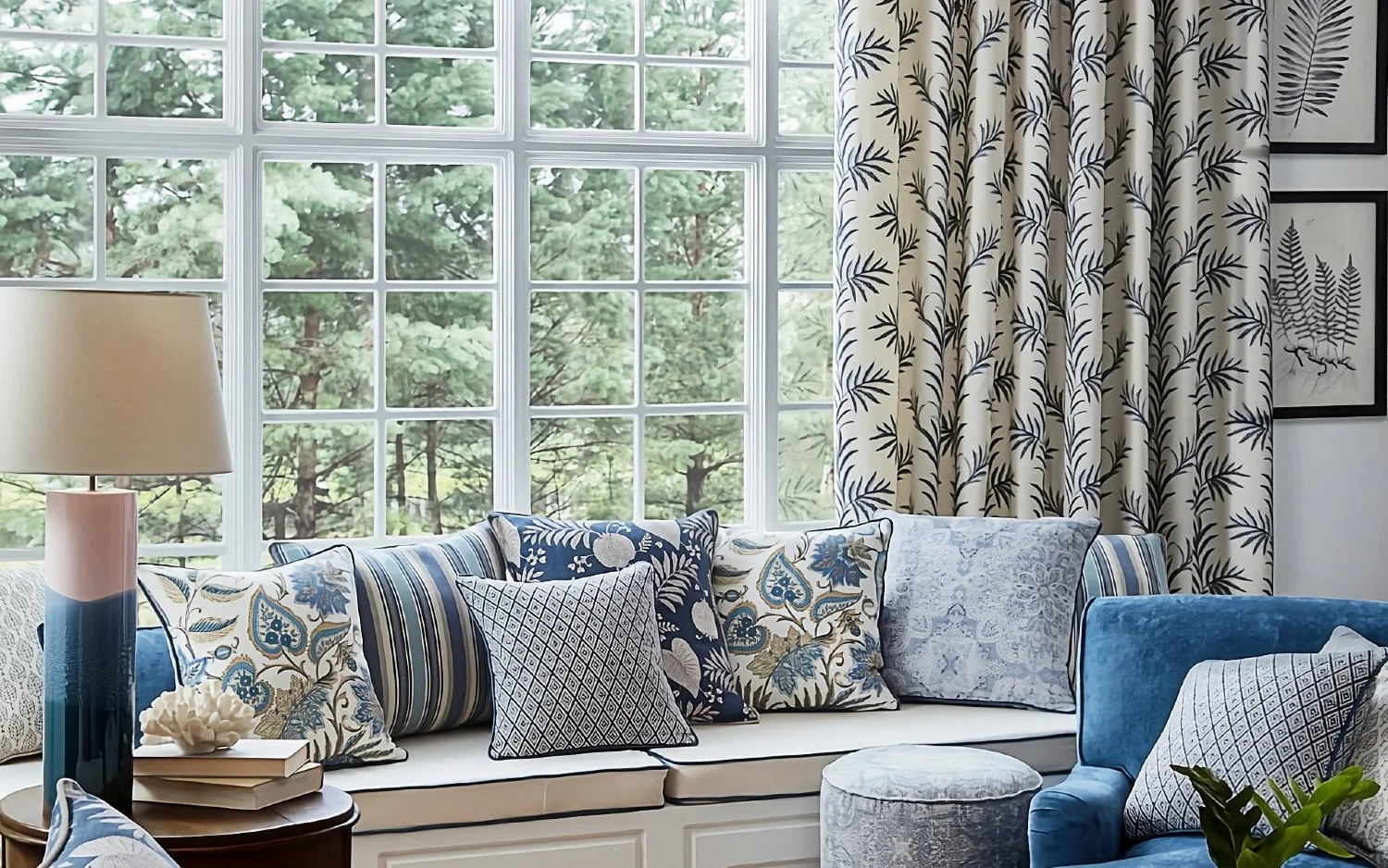
Layering blinds with curtains can work particularly well on bay windows. The blinds provide everyday privacy and light control, while the curtains introduce colour, texture and softness.
For example, simple Roman or roller blinds could be fitted within each section of the bay, with full-length curtains framing the entire window.
This also gives you more flexibility throughout the seasons. You might rely mainly on the blinds during the day, then close the curtains in the evening for a cosier feel.
Think Carefully About Privacy
Bay windows often project farther from the property, which means they can offer wider views outside but may also allow more visibility into your home.
If privacy is important, think about how the window treatment performs at different times of day.
Sheer blinds or voile curtains can soften views into the room while still allowing plenty of daylight. Shutters and Venetian blinds offer more adjustable privacy, while lined curtains provide greater coverage in the evening.
The ideal solution may involve layering two treatments rather than asking one product to do everything.
Do Not Forget Radiators, Furniture and Window Seats
The area around the window also matters.
If there is a radiator underneath the bay, floor-length curtains could restrict the heat when closed. A fitted blind or shorter curtain might be more practical.
Bay windows are also popular places for window seats, desks and occasional furniture. Your chosen treatment needs to operate easily without getting caught behind furniture or taking up valuable space.
Thinking about the whole area, rather than simply the glass, usually produces a much better result.

Made-to-Measure Treatments are Particularly Useful for Bays
Bay windows often vary considerably from one property to another.
The angles, depth, frame position and available fixing space can all influence what will work. Made-to-measure window treatments allow these details to be considered properly, rather than trying to make a standard-sized product fit an unusual shape.
Professional measuring can be especially worthwhile for bays, where several blinds, shutters or sections of track need to meet neatly.
Which Window Treatment is Best for Your Bay Window?
There is no single option that works for every bay.
Choose shutters if you love a clean, architectural finish and want excellent control over privacy. Consider blinds if you want something compact and practical. Choose curtains if softness and fabric are important to the overall feel of the room, or combine curtains and blinds if you want the best of both.
Above all, the treatment should work with the proportions of the bay rather than hiding them.
A carefully planned window treatment can highlight one of the most attractive features in your home while making the room more comfortable, private and practical every day.
If you are unsure which option will work best for your bay window, speak to a window treatment specialist. They can assess the shape of the window, take accurate measurements and help you choose a solution that looks right and works beautifully in your home.